Browse Items
178 active listings
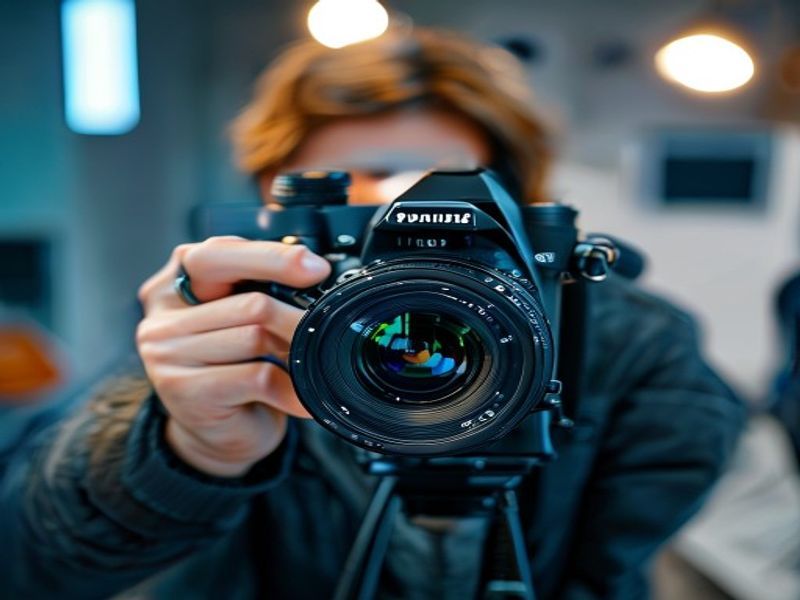
Camera Confidence Workshop -- Owning the Lens
The camera is not your enemy. It's your best friend -- the one who sees everything and forgives everything. I teach you how to find your light, your angle, and your truth. We work with a live camera feed so you can see yourself the way the audience sees you.


Vintage Pin-Up Photography Lighting Kit
Three-point lighting setup from the golden age of Hollywood glamour. Key light, fill light, backlight, plus a butterfly diffuser for that soft, luminous look. This is how they shot me, Garbo, and Dietrich. Tip: The backlight is the secret -- it separates you from the background and makes your hair glow.

Method Acting Books (Strasberg + Chekhov Collection)
My personal copies of Strasberg's Dream of Passion and Chekhov's To the Actor. Annotated in my handwriting. These are the two books that made me a real actress instead of just a movie star. Read both -- they contradict each other and that's the point.
Commanding the Room -- Presence and Dignity on Screen
I teach you to walk into a scene and own it without raising your voice or clenching your fist. Power isn't volume. It's stillness when everyone else is shouting. We work on posture, eye contact, and the silence between words. Tip: Before you say your first line, stand still for three seconds. Let the audience come to you.


Dialect & Accent Coaching -- From Caribbean to Classical
I rebuilt my voice from a thick Bahamian accent to classical American diction. I can teach you to do the same with any accent. We work on vowel placement, consonant precision, and rhythm. The goal isn't to erase where you're from -- it's to choose how you sound for each role.

Film Directing Fundamentals -- Telling the Story Through the Lens
I directed nine films. The trick is knowing what the camera should see versus what the audience should feel. Those are often different things. We work on shot selection, actor direction, and visual storytelling. Bring a short script and we'll storyboard it together.
Autobiography Collection (The Measure of a Man + This Life)
Both my memoirs. The Measure of a Man won the Grammy for spoken word. This Life tells the full story -- Cat Island, the tomato fields, dishwashing in Harlem, and every role that mattered. Read them in order.
Physical Acting Masterclass -- The Body Tells the Story
I never went to acting school. I learned by doing. My body was my instrument -- the way I scratched, squatted, spat, laughed. Kurosawa once told me to watch how animals move. A tiger doesn't announce itself. It moves, and you KNOW it's a tiger. We work on physicality, gesture, and primal energy.


Samurai Armor Set (Reproduction Do, Kabuto, Menpo)
Full reproduction samurai armor: chest plate (do), helmet (kabuto), and face guard (menpo). I wore gear like this in Throne of Blood and Samurai Trilogy. It changes how you stand, walk, and breathe. Tip: Wear it for an hour before filming -- let your body adapt so the armor disappears.
Film Directing Masterclass -- Composing with the Camera
I teach directing the way I learned painting -- through composition. Where is the eye drawn? What is the relationship between foreground and background? We use storyboards, not shot lists. Every frame should be a painting that moves. Tip: Use multiple cameras. Actors perform differently when they don't know which camera is live.

Storyboard Workshop -- Drawing Your Film Before You Shoot
I painted full-color storyboards for every scene in my later films -- Kagemusha, Ran, Dreams. They're works of art on their own. You don't need to be a great painter. You need to THINK visually. We work with watercolors and ink. Bring your script and we'll draw your film.
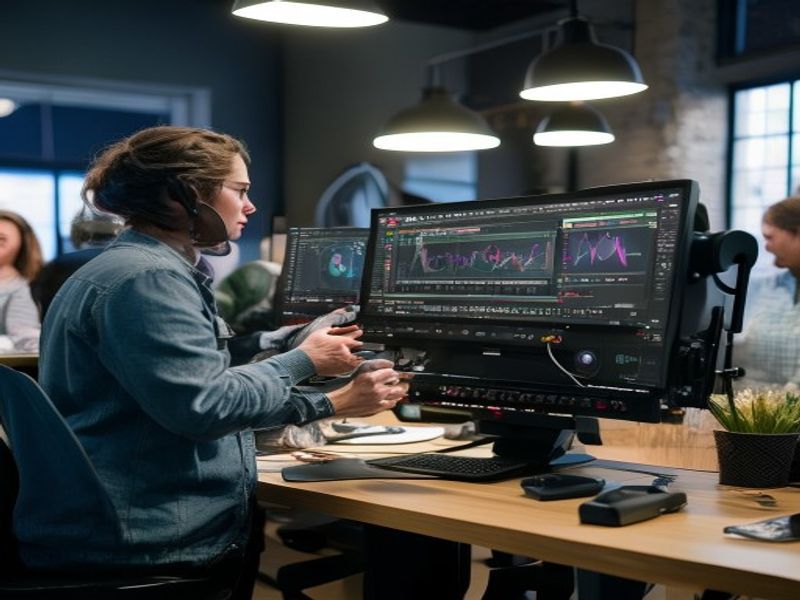
Film Editing Workshop -- The Invisible Art
Editing is where the film is truly made. I'll show you how a two-second cut changes everything -- mood, pace, meaning. We work with actual footage. I cut on a Moviola for forty years. Digital is faster but the principles are eternal: rhythm, contrast, surprise. Tip: The best cut is the one the audience doesn't notice.
85-96 of 178 items (page 8 of 15)